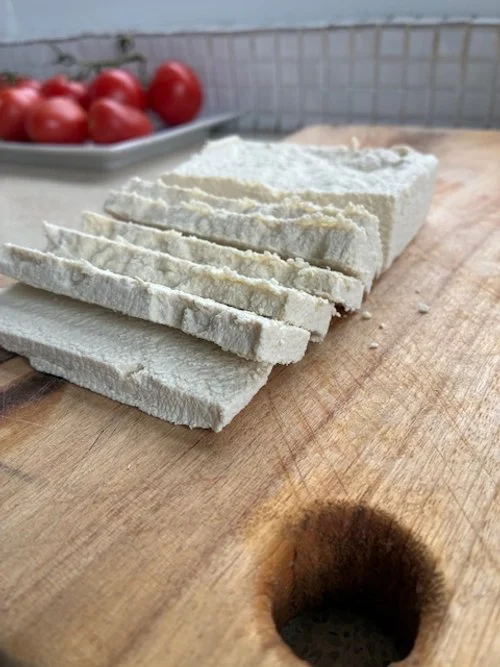
Tofu was never my favourite food but when you are a vegetarian or vegan, tofu is the ultimate chameleon. Besides taking on any flavour profile you want, it can be air fried for a crispy on the outside and chewy on the inside nugget to add to a noodle soup or stir fry, grated and stir fried to make a scramble, blended to make a vegan ‘cheese’ or dip, broiled, grilled, baked or simply marinated. The possibilities are tantalisingly endless.
But first let’s make some fava bean tofu. Where I live I can not buy it. Although, even if I could, I wouldn’t because commercial brands use calcium sulfate, an ingredient I do not want to use. Last year, quite by chance, I stumbled upon an article on the internet titled ‘Which Tofu Coagulant in Best? by Mary at Mary's Test Kitchen) dated 7 January 2024. The article outlines the different coagulants, the required measurements and the different qualities of each. Mary did all the work for us!!! Suddenly making tofu became a possibility.
I chose to use lemon as my coagulant and fava beans rather than soy. While lemon does leave a slight lemony taste to the tofu, it disappears once you cook it and I enjoy lemons for the health benefits and flavour.
Fava beans can be difficult to find however they are available in some health food stores if you look. Make sure you use dried split fava beans (with their skins OFF). I include pictures at each step of the way so you know what to expect. The ingredient list is short and the process is straightforward. It simply takes time.
You do need five pieces of equipment - a high speed blender (if you don’t have one, treat yourself! It is SO worth it!), a tofu press which you can find on line. They are inexpensive and simple. I would suggest you buy one with vents to let the water out at the top if you can. I didn’t and I have to take the top off and drain the water instead. Small issue but vents make life that tiny bit easier. You need a milk bag to strain the fava bean milk. Whatever you may use to strain nut milk will work here as it is exactly the same process. You need a simple thermometer to monitor the temperature of the bean milk and a piece of cheesecloth to line your tofu press.
Fava Bean Tofu
Ingredients
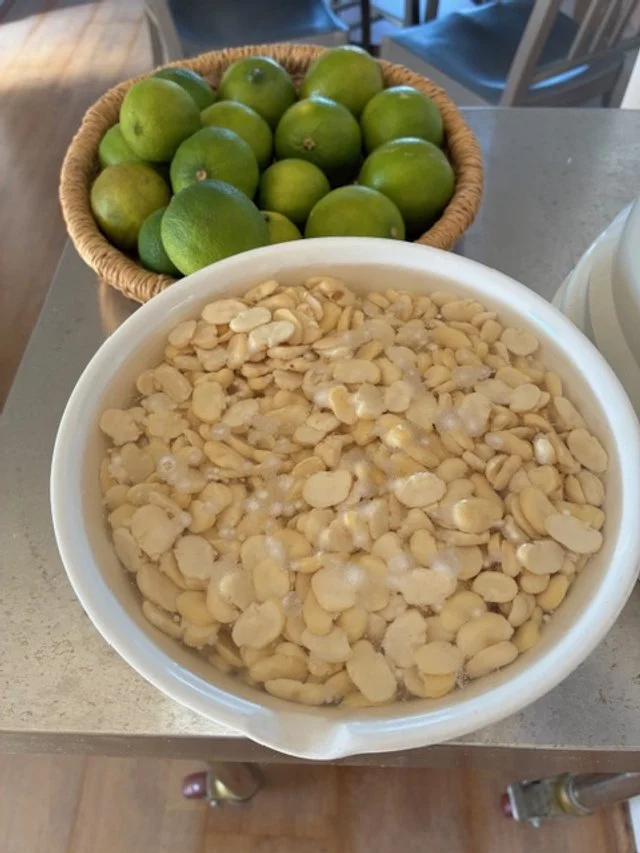
454 grams split fava beans, soaked overnight
4 tbs pure lemon powder (or lemon/lime juice
7 cups room temperature filtered water
Method
Thoroughly wash and soak your fava beans in a large ceramic bowl with lots of filtered water so the beans are fully submerged. Leave overnight.
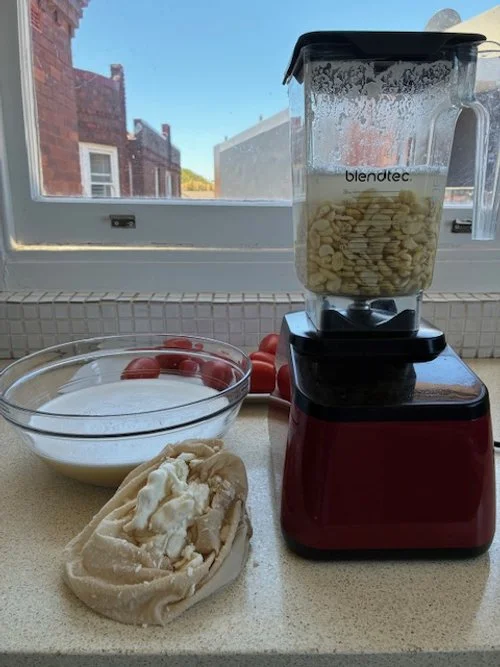
The next morning, strain and rinse your beans. In two batches, add half the fava beans with 3 1/2 cups filtered water and blend on high speed for 1 minute. With clean hands, over a large glass bowl, pour the fava bean milk through a milk bag and squeeze until you only have a very dry, white pulp left. Empty the pulp in to the compost and repeat this process with second half of beans.
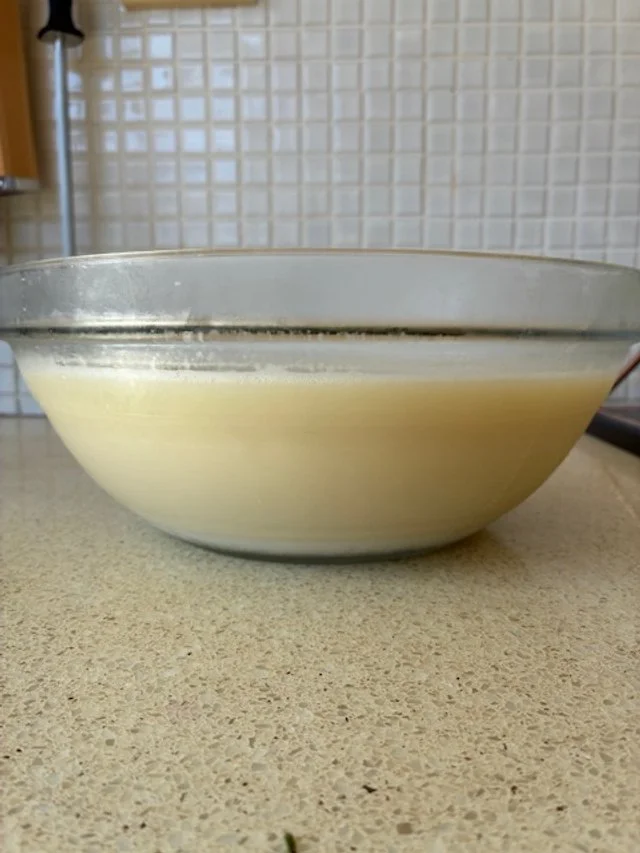
Allow the fava bean milk to sit undisturbed for at least 20 minutes. At this stage you can cover the bowl, place it in the refrigerator until the next day if you are pressed for time or want to split the process over two days. The purpose of allowing the milk to stand is for the starch to settle to the bottom of the bowl.
Take a large spoon and very gently scoop out the bean milk in to a medium sized dutch oven or large sauce pan (while not disturbing the starch at the bottom). You will need to leave a little milk behind in order to not contaminate the milk with starch.
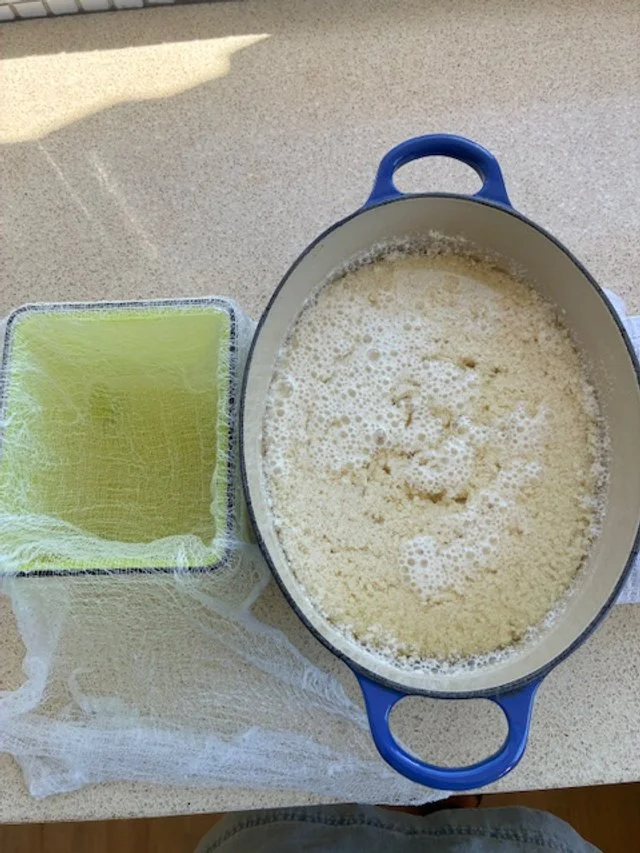
Prepare your coagulant by mixing 1 cup of filtered water with 4 tbs of lemon powder (or lemon/lime juice). Bring the bean milk to 180 F stirring constantly so the milk does not burn at the bottom of the pan. Turn off the heat, mix your coagulant and pour it slowly in to the bean milk while stirring. Then stop the stirring motion, stand your spoon upright in the middle of the pot and let the mixture come to a standstill. Leave uncovered to curdle for 30 minutes.
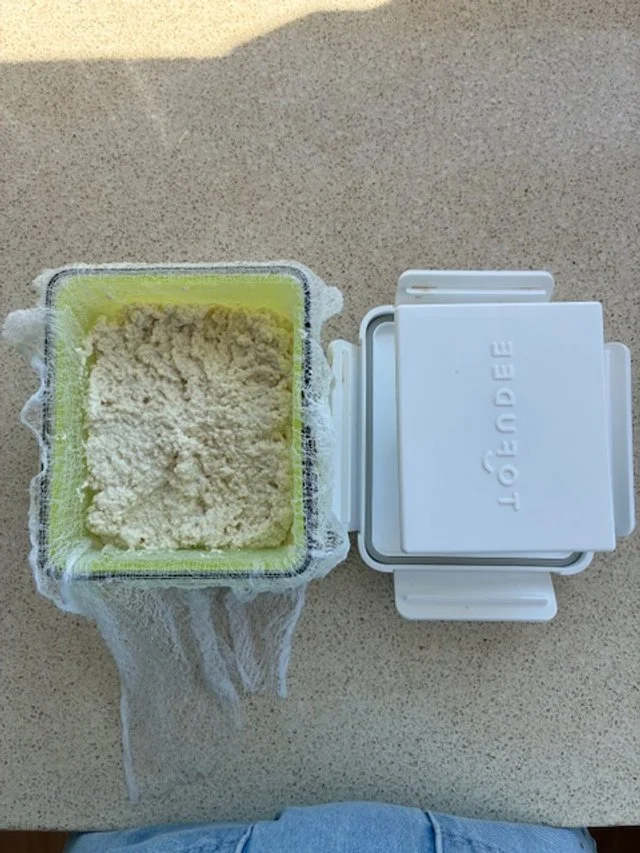
Rinse your cheese cloth in water and squeeze out the excess. Line the tofu press with cheese cloth and with a slotted spoon, scoop the bean curds in to the tofu mold, At the end you can use a fine mesh strainer and pour the remaining curdled bean milk through to capture all the curds.
Level out the bean curds in your tofu press and drain out any excess water. Gently fold the cheese cloth over the top of the bean curds and attach the top of the tofu press. Depending on your press, you may need to empty out water manually or through vents. Place in the refrigerator to drain and set. Check occasionally to empty out water and adjust the pressure if necessary.
After several hours or the next day, take out your tofu, unwrap the cheese cloth and you have a block of homemade fava bean tofu!
I rinse out the cheese cloth and milk bag and add them to my next load of laundry so they are ready for their next use.
Store your tofu in an airtight container in the refrigerator.
Look out for some fun ways to consume tofu in the days to follow!